 GTO Fisher
Fair Play
Better tools for learning. Independent decisions at the table. Our approach to protecting both.
Independent play
Fisher is built for learning away from active play: reviewing completed hands, exploring strategies and practising decisions.
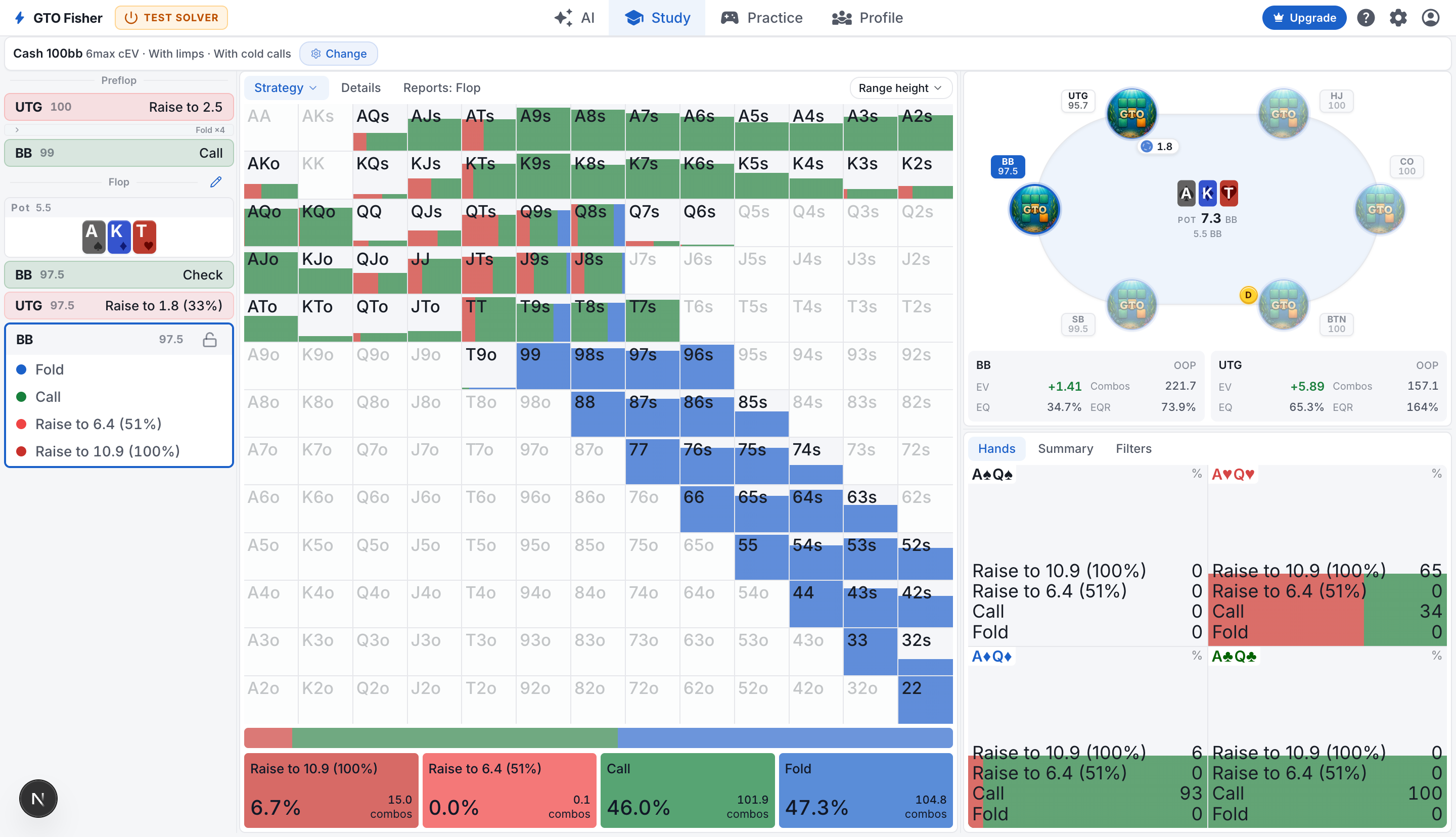
Study between sessions
Review hands you have the right to use, explore hypothetical spots and practise for your next session. During active play, do not consult Fisher or ask someone else to use it for you. A break or a second device does not remove that boundary.
No real-time assistance
Our policy prohibits real-time advice, automated play and connections that feed live game information into Fisher. It also prohibits collusion and helping others cheat. Always follow your poker room or tournament rules, including stricter restrictions.
Account & service protection
Protecting fair access starts with how accounts, data and study tools are used.
Keep access personal
Unless a written team or enterprise agreement says otherwise, one account is for one person. Sharing, selling or renting access, bypassing limits and evading suspensions are prohibited.
Protect tools from misuse
Our policy prohibits unauthorised scraping, bulk extraction and bypassing access controls. Proportionate checks may consider session records, request rates, concurrent use and export volumes when investigating suspected abuse. These measures do not guarantee detection of every violation.
Review & privacy
Suspected misuse calls for careful review. Account decisions should reflect the evidence and the seriousness of the issue.
A proportionate response
The policy provides for warnings, restrictions or suspension depending on the evidence, severity and risk. Notices explain the action and appeal route where lawful and consistent with security. Where reasonably practicable, an appeal is reviewed by someone who did not make the original decision.
Respect study privacy
We do not routinely share identifiable study histories with poker operators. Any account-specific operator verification or disclosure programme would require a separate, prominent privacy notice explaining the data, recipients and basis for sharing.